Media’s Favorite Memories
By: Madelyn Beyer Media is noted for its freedom around the capitol. Truly, running around, filming, interviewing, and observing is where these amazing delegates thrive.…
By: Greta Wallace
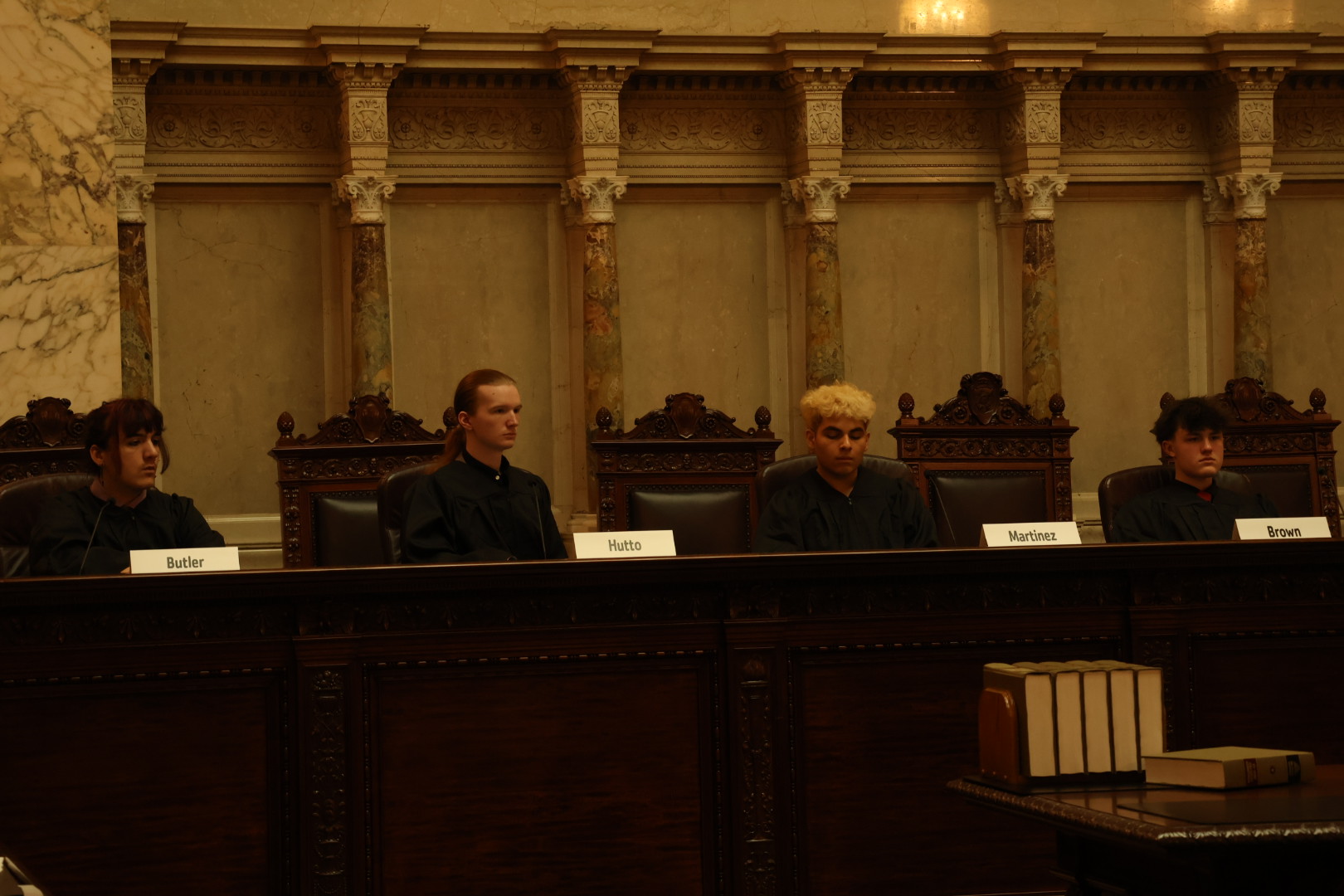
In the 2025-2026 Youth In Government session there are five different cases being argued in the Supreme court. The second case, State of Wisconsin v Keegan Jones, asks the constitutional question of “Did law enforcement violate Keegan Jone’s fourth amendment rights by obtaining private social media messages and videos without a warrant, or does using a third-party app eliminate a person’s reasonable expectation of privacy?” according to the YIG 2026 conference sessionbook.
To brief, Keegan Jones and his friend were recording themselves messing around with fireworks and posting them on a social media account. In one of the clips, the friend makes a joke about Keegan having something stronger than fireworks while showing him holding something looking similar to a hand gun. As high school students, they posted these videos for their fellow classmates to see as well which led to anonymous reports being filed to their school resource officer (SRO).
The report was about illegal drug usage, which led the school to see the videos and decide to act on them. The school called Jones down to have a talk, and the SRO, without a warrant, contacted the social media company asking for them to access private messages between Jones and his friend. The company complied and sended copies of their chats over to the school, leading them to use it as evidence in the case. In trial court, the verdict was in favor of the State. Jones’ party appeals this case, stating that the evidence was gained without a warrant and therefore violates his fourth amendment right to privacy.
The court of appeals agreed with the previous decision, siding with the state. After this, they decided to ask for the case to be heard one final time by the Supreme Court, and they agreed. This is the point in the case where delegates simulate the trail. Again, the main constitutional question in this case is, “Did law enforcement violate Keegan Jones fourth amendment rights by obtaining private social media messages and videos without a warrant, or does using a third-party app eliminate a person’s reasonable expectation of privacy?” If Jones’ party can prove that this act did go against his fourth amendment right, “The right of the people to be secure in their persons, houses, papers, and effects, against unreasonable searches and seizures”, then they win the case. If the other party is able to convince the justices that the previous verdicts were correct and didn’t go against his fourth amendment right, then they will win the case for the final time.