Media’s Favorite Memories
By: Madelyn Beyer Media is noted for its freedom around the capitol. Truly, running around, filming, interviewing, and observing is where these amazing delegates thrive.…
By: Jerson Torres
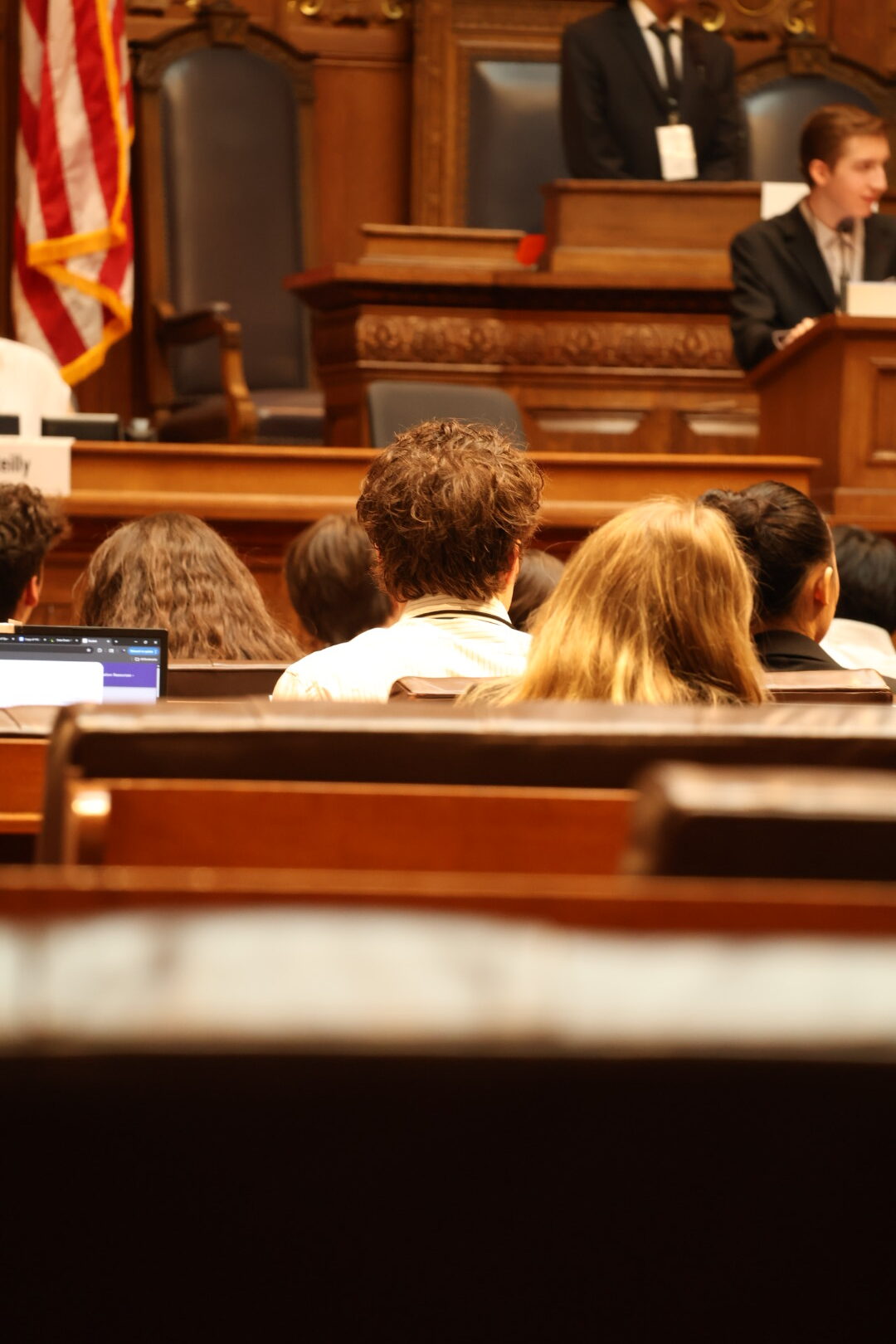
In the Nelson Assembly, a variety of subjects pass through the chamber and echo throughout the Assembly walls. Without proper air conditioning in the facilities (no, not the air conditioning we use during the summer), we would not be able to enter the building. Proper treatment of the air and its CO2 levels is a major contributor to this. One major bill addressed within the Nelson chamber was the Act to improve public health, which observes the CO2 levels and regulates the building requirements.
The opening summation of the bill touched briefly on the dangers of high CO2 levels and how they could impact people’s lives if not addressed within buildings and their layouts. Moreover, the delegate pushed towards a limit of 5.3 kgs of CO2 per square foot of a building. A pro speaker towards the bill spoke about the harm that CO2 pollution has caused from buildings alone, which is 40% of all of the pollution to Earth. One of the delegates against this bill mentioned that the fines would be far too low, deeming this bill useless in their eyes.
There was a fair amount of criticism brought to the author’s attention regarding the unethical practices corporations could contribute to if not much is done to penalize them, as well as the program’s underfunding. Contrastingly, there was just as strong a counterargument for a boost to the economy with the implementation of the bill. Not only would there be environmental benefits but even extra jobs it could create in the job market were brought up. Integration of the bill into all buildings in Wisconsin would be nothing far from crucial.
With a series of questions asked on some specifications of the terms that were used, there appeared to be a clearer understanding of what the bill entailed, for most. The closing summation ended with every sentence delivered in deliberation. Although the arguments both pro and con were neck in neck, roughly half in favor and the other half against. When the time came to vote aye or nay, it was absolutely in favor of the bill, so much so that it was unanimously passed.